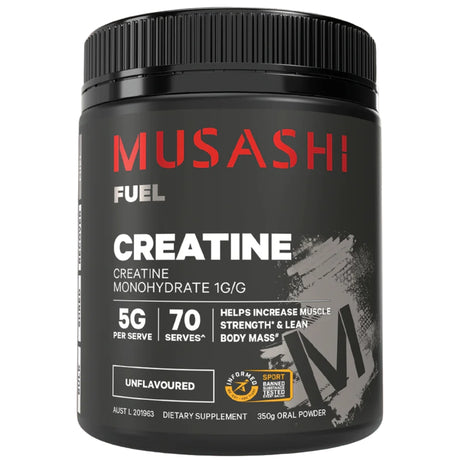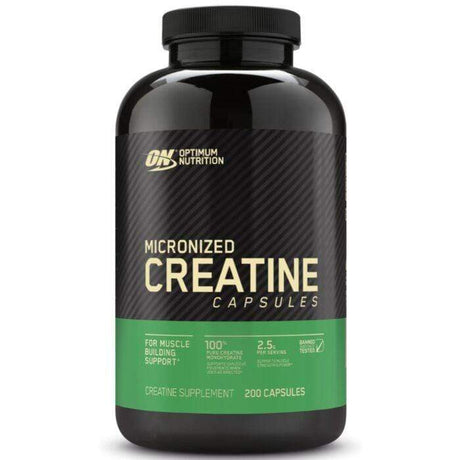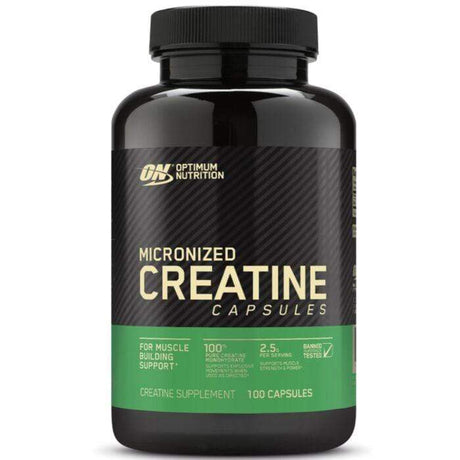


Whether you're an athlete, serious about weight training or just looking to get more out of your workouts, creatine is definitely a supplement that you should consider taking.
As New Zealand's first choice supplement store, we stock dozens of creatine supplements from the world’s highest quality brands. If you're already a creatine convert, head over to our creatine supplement selection to find one that fits your lifestyle and workouts.
In this guide, we'll explain exactly what creatine is, what benefits it can bring to your workout and nutrition regimen, and how you should take it to optimise its effects. For those still wondering “what is creatine exactly?” and if you should be taking it, keep reading to find out everything you need to know.
What is creatine?
Creatine is an organic acid that occurs naturally in the body. It's mostly stored in skeletal muscle, where it acts as an energy reserve for intense bursts of activity such as sprinting or lifting weights. It has the ability to rapidly produce ATP (adenosine triphosphate), which is used as energy for all cells in the body, primarily muscle. Thanks to this unique trait, creatine is known to have numerous benefits for strength training, repeated sprint ability (such as in team sports), recovery, and many more applications as well.
Creatine was discovered in 1832 and initially isolated in pure form by researchers in the mid-1800s. Today, creatine is available as a dietary supplement and remains one of the most popular sports supplements on the market.
How creatine works
So, how does creatine work? Your muscles rely on ATP for energy, however, muscles only store a very small amount of ATP. When you push your muscles to their maximum, this ATP is used up very quickly—faster than your body can naturally remake it.
This is when creatine comes into play. While ATP is being depleted, creatine phosphate (CP) stores are broken down to form more ATP for energy. This means you can keep producing powerful movements for a longer.
Most adults store around 120g of creatine in their bodies, but you can increase this through supplementation. Essentially, by taking creatine, you can increase the total pool of CP in your body, which can be broken down to create ATP during workouts — giving you more energy for more effective workouts.
The different forms of creatine
You've probably seen many different forms of creatine supplements on the market. But which one should you choose?
- Creatine monohydrate is the most extensively studied and common form of creatine supplement available. It has been researched for over 20 years and is well known to be safe.
- Creatine hydrochloride (HCL) is another popular option. It's claimed to be more water-soluble than creatine monohydrate, allowing it to dissolve in the body more quickly. If you experience bloating or digestive discomfort from creatine monohydrate, then this may be a good option to consider.
- Creatine citrate, creatine phosphate, magnesium creatine chelate and Kre-Alkalyn (buffered creatine) are also commonly available, but there's not been as much research done to support their use.
Several major supplement brands offer their own formulations of creatine. As long as you're buying from a reputable brand, then you can be confident that the creatine is at least 99% pure. Any supplements that are labelled as "creapure" promise 99.9% purity.
Some creatine supplements are micronised, which means they're ground up into finer particles. This allows the supplement to dissolve in liquids more easily and can make it easier for you to mix your creatine powder with water or a sports drink.
If you're not keen on the powder texture of standard creatine monohydrate supplements, you might like to try creatine capsules. Capsules can be a convenient way to take creatine, especially if you're in a loading phase and taking high doses.
The benefits of creatine
Creatine has numerous benefits that can enhance your strength and performance in training, particularly during weightlifting or high-intensity interval workouts.
- Creatine can provide a boost in strength and certain types of endurance so you can push yourself harder for longer.
- Creatine benefits muscle recovery between sets and exercises so you can train harder, lift heavier weights or do more reps with a given weight.
- It can help create new muscle tissue and increase lean body mass. In turn, this helps improve overall body composition and boosts your metabolism.
- Creatine helps pull excess water into the muscles, allowing them to swell and look bigger. As well as providing psychological benefits such as increased confidence in the gym, this can help with muscle growth and performance.
- Taking a creatine supplement can increase your energy levels and improve mental focus, allowing you to push yourself further during training so you can get the most out of your workouts.
- Creatine has also been shown to have neuroprotective effects as well as benefits for cognitive performance.
Are there any side effects of taking creatine?
Creatine is considered highly safe, and its side effects are typically mild. However, some people experience mild stomach discomfort or cramping when taking creatine, especially at higher doses (20+ grams per day).
It's also a good idea to take creatine with a large glass of water and plenty of sodium (salt) since it pulls more fluid into the muscles.
You can minimise any potential adverse creatine side effects by talking to your healthcare provider, following dosage directions and increasing your water intake. You might also like to experiment with taking creatine at different times of the day, such as before or after training.
Most creatine supplements also contain other ingredients such as magnesium, dextrose or rice flour. These can help reduce any potential side effects further by providing more water and carbohydrate for better uptake into muscle tissue.
Read more on the myths of creatine supplementation in our blog Is Creatine Safe? 8 Common Myths Debunked By Science
Who should take creatine?
Creatine is best suited for people who are regularly participating in intense workouts or weightlifting sessions. It can also enhance the performance of endurance athletes since it provides more energy for muscle contractions, which allows you to work harder for longer periods of time.
Creatine is a safe and well-tolerated supplement with numerous benefits, so anyone with a healthy diet and an active lifestyle may improve their health and be able to push themselves harder physically by adding it to their daily routine.
However, creatine supplements should be avoided if you are pregnant or breastfeeding since there is a lack of research in this area. You should also avoid taking creatine if you have a history of kidney disease or liver problems since it can increase the workload on these organs and lead to health complications. Always consult a health professional before taking any form of supplements.
How to take creatine
To get the most out of creatine, consistency matters more than complexity. Most people do well with a daily dose of 3–5 grams, taken every day — even on rest days — to keep muscle creatine levels saturated.
You can mix creatine powder with water, juice, or a protein shake, and take it at any time of day, though many prefer post-workout alongside carbs or protein to support absorption. If mixing with juice, consume immediately, as the acidity of the juice can degrade creatine if it's left sitting for hours.
A loading phase (20 grams per day split into 4 doses for 5–7 days) is optional and can speed up saturation, but it’s not required for results. Just as important: stay well hydrated, since creatine pulls water into your muscle cells. Taken consistently, creatine is one of the simplest and most effective supplements you can add to your routine.
Flavoured creatine, gummies & chews: convenient alternatives to powder
If you love the benefits of creatine but dislike mixing powders or dealing with gritty textures, flavoured creatine and creatine gummies or chews can be an excellent alternative. These formats are designed to make daily supplementation easier, more enjoyable, and more consistent.
Flavoured creatine powders typically contain creatine monohydrate or HCL combined with flavouring, making them easy to mix with water and more pleasant to drink. Many reputable brands also have their flavoured creatine independently tested or verified, ensuring the product delivers the exact creatine content listed on the label with no under-dosing — an important factor when performance and consistency matter.
Creatine gummies and chews are growing in popularity thanks to their convenience. They’re pre-dosed, portable, and don’t require mixing or water, making them ideal for busy schedules, travel, or rest days. As with powders, high-quality gummies are often lab-tested to confirm creatine potency and purity, so you can be confident you’re still getting an effective daily dose.
When choosing flavoured creatine, gummies, or chews, always check the creatine amount per serving, some gummy formats may require multiple servings to reach the standard 3–5g daily dose.
When to take creatine
When you take creatine is less important than taking it consistently, but timing can still support your routine. Many lifters choose to take creatine post-workout, when muscles are primed to absorb nutrients, especially if it’s combined with a protein shake or a carb-containing meal. On rest days, taking creatine with any meal helps maintain saturation and makes it easier to remember. Some people prefer taking it pre-workout for convenience or habit, and that works too — the performance benefits come from long-term muscle saturation, not immediate effects. The best time to take creatine is simply the time you’ll stick to every day.
How to train on creatine
Training on creatine allows you to push slightly harder and recover more efficiently, so it’s best used to support progressive overload. Because creatine helps replenish ATP, you may notice improved performance in high-intensity, short-duration efforts like heavy lifts, sprints, and explosive movements. Take advantage of this by aiming for more reps, heavier weights, or better quality sets over time while maintaining proper form. Creatine doesn’t replace smart programming, so pair it with a structured strength or hypertrophy plan, adequate rest, and good nutrition. When used consistently, creatine can help you train with higher output — turning small performance gains into long-term muscle and strength progress.
Creatine can also be easily stacked with other supplements like protein, carbs, or pre-workouts to support muscle growth and performance. Used as a foundation, it pairs well with products that enhance energy, endurance, and recovery without needing a complicated supplement routine.
Can I take creatine while cutting?
Yes — creatine is safe and effective to use while cutting. It helps preserve strength and lean muscle mass when calories are lower, allowing you to train harder despite being in a deficit. While some people notice a small increase in water weight, this is intramuscular water, not fat, and doesn’t interfere with fat loss or muscle definition.
Get creatine supplements from Sportsfuel to supercharge your workouts
Creatine is safe, effective and is one of the best supplements for boosting your strength, power and endurance during training. At Sportsfuel, we offer one of the widest ranges of supplements and sports nutrition in New Zealand, including all the top brands.
To find out which is best for your training goals, take a look at our range of creatine supplements online today.
References:
1. Wang, C., Lin, S., Hsu, S., Yang, M. and Chan, K., 2017. Effects of Creatine Supplementation on Muscle Strength and Optimal Individual Post-Activation Potentiation Time of the Upper Body in Canoeists. Nutrients, 9(11), p.1169.
2. Cooke, M., Rybalka, E., Williams, A., Cribb, P. and Hayes, A., 2009. Creatine supplementation enhances muscle force recovery after eccentrically-induced muscle damage in healthy individuals. Journal of the International Society of Sports Nutrition, 6(1).
3. Olsen, S., Aagaard, P., Kadi, F., Tufekovic, G., Verney, J., Olesen, J., Suetta, C. and Kjaer, M., 2006. Creatine supplementation augments the increase in satellite cell and myonuclei number in human skeletal muscle induced by strength training. The Journal of Physiology, 573(2), pp.525-534.
4. Powers ME, Arnold BL, Weltman AL, et al. Creatine Supplementation Increases Total Body Water Without Altering Fluid Distribution. J Athl Train. 2003;38(1):44-50.
5. Avgerinos KI, Spyrou N, Bougioukas KI, Kapogiannis D. Effects of creatine supplementation on cognitive function of healthy individuals: A systematic review of randomized controlled trials. Exp Gerontol. 2018;108:166-173. doi:10.1016/j.exger.2018.04.013
6. Beal MF. Neuroprotective effects of creatine. Amino Acids. 2011 May;40(5):1305-13. doi: 10.1007/s00726-011-0851-0. Epub 2011 Mar 30. PMID: 21448659.