
If you've looked into creatine and wondered whether it's worth taking as a woman, you're not alone. Creatine has a long history as a strength sport staple, and while it's become more accepted across the board in recent years, the research on what it actually does for women still hasn't caught up in mainstream conversation. That's worth fixing.
Creatine monohydrate is one of the most studied supplements in sports nutrition, but that alone doesn't mean much. Most exercise and nutrition research has historically been conducted in men, and women aren't just smaller men. Hormonal fluctuations across the menstrual cycle, the menopause transition, and differences in how women synthesise and store creatine all affect how the supplement works in practice.
The good news is that the research on creatine in women specifically is solid, and in some areas actively growing. There's also a layer most people haven't heard about: your hormones may affect how your body uses creatine, even if creatine doesn't affect your hormones back. This post covers what creatine actually does, how oestrogen fits into that picture, what the evidence shows for women specifically, the myths worth ignoring, and how to take it without overcomplicating things.
What Creatine Actually Does
Creatine is stored in your muscles as phosphocreatine and used to regenerate ATP, the energy your cells burn during short, intense efforts. Sprinting, heavy lifting, box jumps: these all draw heavily on the phosphocreatine system.
When you supplement with creatine, you increase the amount stored in your muscles. More phosphocreatine means more fuel available for high-intensity work and faster recovery between sets or efforts.
This isn't theoretical. The mechanism has been replicated across hundreds of trials in multiple populations, including women.
Oestrogen and Creatine: A One-Way Relationship
There are some key points most people miss when discussing the benefits of creatine:
- Females naturally produce 70–80% less creatine than males. [1]
- Women's hormonal environment can directly affect how the body makes and uses creatine. [1]
Both points come back to the same underlying mechanism.
Basic explanation: Think of it as a one-way street. Your oestrogen levels can influence how well your body produces and uses creatine, but creatine has no influence back on your oestrogen. When oestrogen is lower, as in the follicular phase of your cycle, during perimenopause, or after menopause, your body's ability to synthesise and utilise creatine becomes less efficient. Given that women already produce significantly less creatine than men to begin with, that hormonal dip may widen the gap further. Supplementing helps close the gap which has a range of benefits (discussed below). For anyone who's wondered whether taking creatine will interfere with their hormones or cycle: the current evidence says it won't.
The scientific explanation: oestrogen and progesterone influence the activity of creatine kinase, the key enzyme in the creatine energy system, and affect the expression of enzymes involved in natural creatine production, including AGAT (arginine-glycine aminotransferase), which controls the rate-limiting step of creatine synthesis.[1,2] Animal models have shown that creatine kinase activity tracks with oestrogen levels across the menstrual cycle, suggesting creatine metabolism shifts throughout the month.[1] As for the reverse: a 2025 trial by Hall et al.[3] measured estradiol directly in peri- and postmenopausal women over 14 weeks of creatine supplementation and found no significant change in oestrogen levels. (Preliminary evidence — the study is small at 15 participants and larger replication is needed, but the finding is consistent with the known mechanism of creatine, which doesn't act on the endocrine system.)
How much does this actually matter in practice? The research here is limited so the practical implications aren't fully clear yet. But it's meaningful for anyone who wants transparency on how creatine may affect females differently to males.
The Benefits of Creatine for Women
Strength and Power Output
Creatine's most known and direct benefit is improved strength. Multiple studies confirm significant increases in strength performance in women following resistance training with creatine, with these effects holding up consistently across decades of research.[4,5]
Women also tend to have lower dietary creatine intake than men. Creatine is found mainly in red meat and fish, and women on average consume less of both.[1] Combined with oestrogen's influence on creatine metabolism across the menstrual cycle, supplementation fills a real gap for many women.
Body Composition
Creatine doesn't build muscle directly. What it does is increase your capacity to train harder and recover faster, and over time, with consistent resistance training, that supports better body composition.
The weight gain concern is common and worth addressing. Creatine draws water into muscle cells, which can add 1–2 kg on the scale in the first week or two. This water goes into the muscle itself, not under the skin. Your muscles may look slightly fuller, but you won't look or feel puffy. That initial weight gain stabilises once your muscles are fully topped up.
Learn more about how creatine helps you build muscle in our blog Creatine to Build Muscle: How It Works and Why It Matters.
Cognitive Function
Your brain runs on energy too, and creatine isn't only stored in muscle. Research shows improvements in cognitive performance under creatine supplementation, particularly during periods of poor sleep or high mental demand.[6,7]
When oestrogen declines, brain energy metabolism can drop with it. Creatine may help pick up some of that slack, which is why there's growing interest in creatine and cognitive function specifically in women going through perimenopause and menopause.
Menopause and Later Life
As oestrogen declines, muscles become less efficient at storing and using energy, which is part of why strength and muscle mass can drop during and after menopause. Research shows creatine supplementation combined with resistance training can significantly improve lower body strength in peri- and postmenopausal women.[1,3]
Mood and Depression
There's emerging evidence that creatine may support mood, and the effect appears to be more pronounced in women than men. The leading explanation is that oestrogen receptors are concentrated on mitochondria, making female brain energy metabolism more sensitive to creatine availability.[2] A 2025 meta-analysis of 11 trials found a small-to-moderate reduction in depression symptoms with creatine supplementation, though the evidence quality is currently rated low.[9] This isn't a treatment claim, but it's a signal worth knowing about, particularly for women navigating perimenopause or low mood alongside training.
Common Myths About Women and Creatine
"It'll make you bulky"
This one is persistent. It's also not how creatine works.
Creatine has no effect on testosterone or oestrogen. It doesn't alter your hormonal environment. What it does is increase your capacity during training, which over time can support muscle development if you're actively training for that outcome and eating to match.
The women who look muscular in gym contexts got there through years of deliberate, high-volume training and specific nutrition planning. Creatine isn't the mechanism. A 3–5g daily dose does not override your body's hormonal baseline.
"It causes bloating"
There's a kernel of truth here, but "bloating" isn't the right word.
Creatine does cause water retention, but it's intracellular: the water goes into the muscle cell, not under your skin or into your stomach. Some people experience mild GI discomfort, particularly during a loading phase (taking 20g/day across multiple doses), but this is largely avoidable by skipping loading entirely and starting at a standard 3–5g daily dose. GI issues are also often avoided by consuming creatine alongside a meal or carbohydrate snack.
"It's a men's supplement"
This has no basis in the research. The trials on creatine include female participants, and the effects on strength and performance hold up. The ISSN position stand[5] doesn't distinguish between sexes for the primary outcomes. If anything, the case for creatine in women is strengthened once you account for lower average dietary intake, oestrogen's effects on creatine metabolism, and the specific demands of the menopause transition.
How to Take Creatine
Which Form to Use
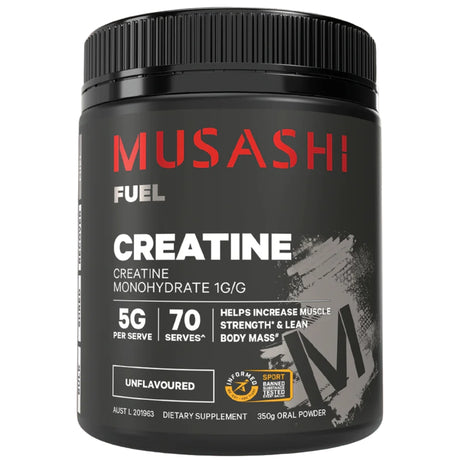
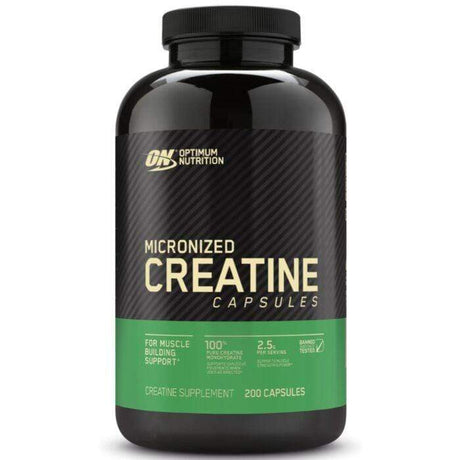
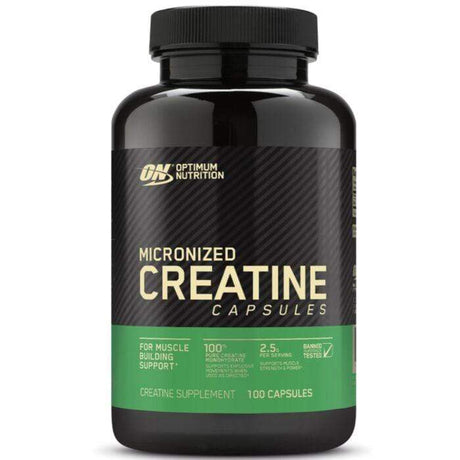
Creatine monohydrate is the most researched form and the one with the strongest evidence base. Start here. It's inexpensive, it works, and it's available in flavoured powder, unflavoured powder, capsule, and other formats. Find options that suit your routine in our creatine supplements collection.
Dosage
The standard dose is 3–5g per day. Women on the lower end of body weight can do well at 3g. There's no strong evidence that higher maintenance doses produce better results once muscle stores are saturated.
Loading phase (optional): Taking 20g/day, split across four doses, for 5–7 days saturates your muscles faster than the maintenance dose alone. It's not necessary. If you'd rather skip the loading phase and any mild GI discomfort that can come with it, start at 3–5g daily and give it 3–4 weeks to reach saturation.
Timing
Research on timing is mixed. Some studies suggest a post-workout dose may offer a slight advantage [8], but the effect size is small and the evidence isn't strong enough to be prescriptive. The most important variable is consistency: take it every day, whatever time works for you. With food or a protein shake is fine.
The Bottom Line on Creatine for Women
Creatine monohydrate is one of the few supplements where the evidence genuinely holds up across multiple claims. Not only that, but the evidence actually applies to women through women focused research. It supports strength, training capacity, and likely cognitive function.
The myths around it don't hold up under scrutiny. It won't affect your oestrogen or testosterone, the water retention is intramuscular, and there's nothing in the research that makes this a "men's supplement."
If you're training consistently and not yet using creatine, it's worth a closer look. Browse our creatine supplements collection — monohydrate options across flavoured and unflavoured formats so you can find something that fits your routine. Need help choosing? Check out our blog How to Choose the Best Creatine for Your Training in 2026.
As with any new supplement, check with your GP or a registered dietitian before starting, particularly if you have any pre-existing health conditions.
Frequently Asked Questions
Should women take creatine?
Yes, if you're doing resistance or high-intensity training. The research shows creatine improves strength and training performance in women as it does in men. Women on average have lower dietary creatine intake than men, and oestrogen's effects on creatine metabolism can further reduce how efficiently creatine is produced and used across the menstrual cycle.[1,2] It's one of the most well-evidenced supplements available and has a strong safety record in healthy individuals.
Does creatine affect hormones in women?
No. Creatine has no known effect on oestrogen or testosterone levels. A 2025 trial measuring estradiol directly in menopausal women found no significant change after 14 weeks of creatine supplementation.[3] The relationship runs one way: oestrogen affects creatine metabolism, but creatine doesn't alter oestrogen. It's not a hormonal supplement.
Will creatine make women gain weight?
It can add 1–2 kg on the scale initially due to water being drawn into muscle cells. This is intramuscular water retention. Your muscles may look fuller, but you won't look or feel puffy. Scale weight tends to stabilise after the first two weeks. Any longer-term muscle mass increases reflect your training progress, not a direct effect of creatine itself.
How much creatine should a woman take per day?
3–5g daily is the standard dose. Women on the lower end of body weight often do well at 3g. A loading phase of 20g/day (split into four doses) for 5–7 days will saturate your muscles faster, but it's optional. If you skip it, 3–5g daily will get you to the same point within 3–4 weeks.
Is creatine safe for women to take long-term?
Yes, for healthy individuals. Creatine monohydrate has a strong safety record across decades of research. The concern about kidney damage isn't supported by the evidence in people with normal kidney function.[5] If you have a pre-existing kidney condition, check with your GP before starting.
To learn more about the safety of creatine, check out our blog Is Creatine Safe? 8 Common Myths Debunked By Science.
Can women take creatine for NZ sport and competition?
Creatine is not on the World Anti-Doping Agency (WADA) prohibited list and is legal for use in sport. It's widely used by competitive and recreational athletes across New Zealand and internationally. If you compete at an elite level, check your specific sport's governing body guidelines, as supplement testing protocols can vary.
References
- Smith-Ryan AE, Cabre HE, Eckerson JM, Candow DG. Creatine supplementation in women's health: a lifespan perspective. Nutrients. 2021;13(3):877. https://doi.org/10.3390/nu13030877
- Ellery SJ, Walker DW, Dickinson H. Creatine for women: a review of the relationship between creatine and the reproductive cycle and female-specific benefits of creatine therapy. Amino Acids. 2016;48(8):1807–17. https://doi.org/10.1007/s00726-016-2199-y
- Hall L, Klassen S, Holbein J, Waters J. Impact of creatine supplementation on menopausal women's body composition, cognition, estrogen, strength, and sleep. J Int Soc Sports Nutr. 2025;22(sup1):2533673. https://doi.org/10.1080/15502783.2025.2533673
- Vandenberghe K, Goris M, Van Hecke P, Van Leemputte M, Vangerven L, Hespel P. Long-term creatine intake is beneficial to muscle performance during resistance training. J Appl Physiol. 1997;83(6):2055–63. https://doi.org/10.1152/jappl.1997.83.6.2055
- Kreider RB, Kalman DS, Antonio J, Ziegenfuss TN, Wildman R, Collins R, et al. International Society of Sports Nutrition position stand: safety and efficacy of creatine supplementation in exercise, sport, and medicine. J Int Soc Sports Nutr. 2017;14:18. https://doi.org/10.1186/s12970-017-0173-z
- Rae C, Digney AL, McEwan SR, Bates TC. Oral creatine monohydrate supplementation improves brain performance: a double-blind, placebo-controlled, cross-over trial. Proc R Soc B Biol Sci. 2003;270(1529):2147–50. https://doi.org/10.1098/rspb.2003.2492
- Rawson ES, Venezia AC. Use of creatine in the elderly and evidence for effects on cognitive function in young and old. Amino Acids. 2011;40(5):1349–62. https://doi.org/10.1007/s00726-011-0855-9
- Antonio J, Ciccone V. The effects of pre versus post workout supplementation of creatine monohydrate on body composition and strength. J Int Soc Sports Nutr. 2013;10:36. https://doi.org/10.1186/1550-2783-10-36
- Eckert I, Lima J, Dariva AA. Creatine supplementation for treating symptoms of depression: a systematic review and meta-analysis. Br J Nutr. 2025;134(11):947–59. https://doi.org/10.1017/S0007114525105588